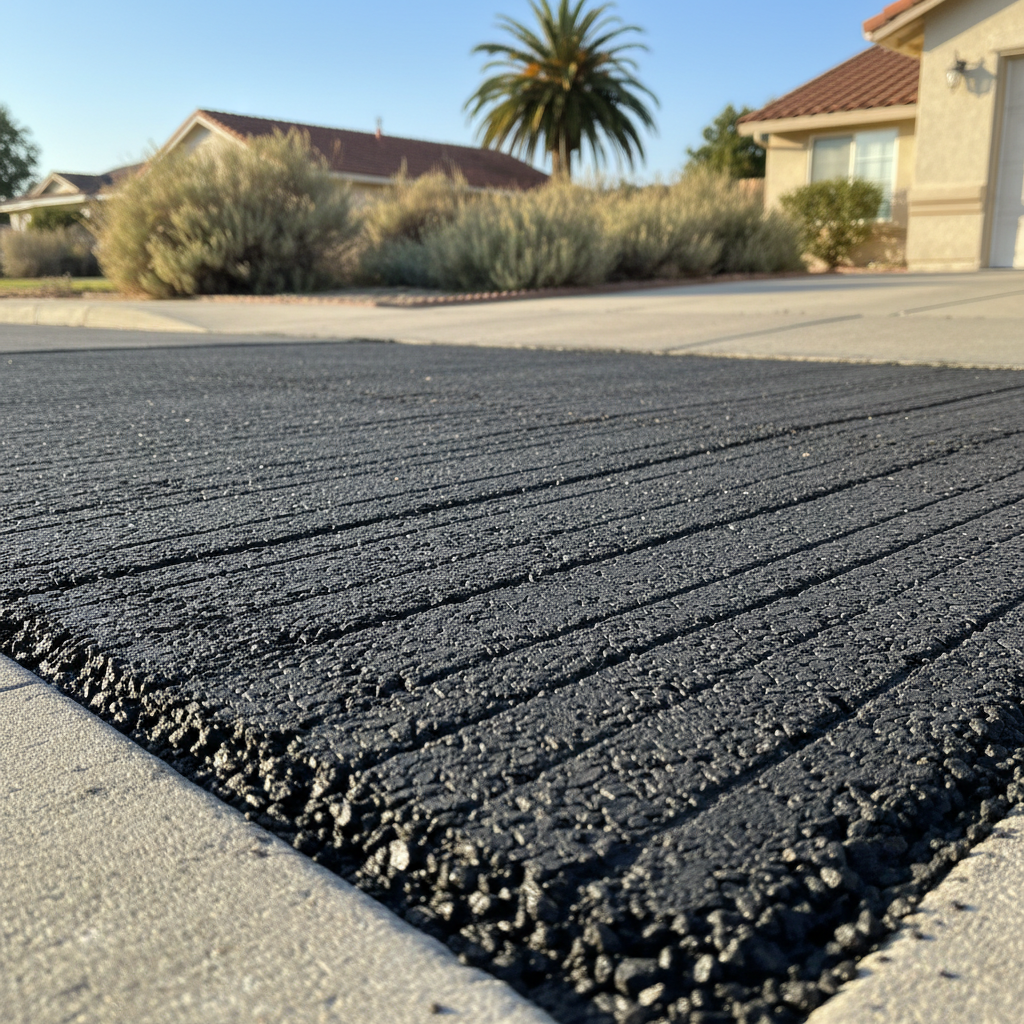
Alright, let's talk about asphalt milling. You’ve probably seen it happening on streets around Inglewood, maybe even thought, "What in the world are they doing to that road?" Well, for homeowners, especially those of you with a beat-up driveway, milling might just be the answer you’re looking for.
Milling isn't some fancy new trick; it's actually a pretty smart way to deal with an aging asphalt surface without ripping everything out and starting from scratch. Basically, it means taking off the top layer of your existing asphalt. Think of it like a giant planer shaving off the old, worn-out surface to create a fresh, level base. The cool part? That old asphalt doesn't just get tossed. Nope. It's collected, crushed, and recycled, often right back into new paving projects.
So, When Does Milling Make Sense for Your Driveway?
Got cracks? Potholes? Maybe some uneven spots where water just loves to hang out after a good rain? If your driveway has surface issues but the foundation underneath still feels solid, milling is usually a good candidate. It’s a cost-effective and environmentally friendly alternative to a full tear-out and replacement.
Here in Inglewood, we deal with some pretty specific conditions, don't we? Our clay-heavy soils, especially in neighborhoods like Morningside Park, expand when wet and shrink when dry. This constant movement can really mess with a driveway's base over time. If your driveway has cracks and dips because of surface wear, but the base is still holding up against that soil movement, milling can prep it for a new, smoother surface that will last.
It's also great if you're trying to fix drainage problems caused by an uneven surface. Milling can help re-establish proper grading so water actually runs off instead of pooling.
Before You Start: Planning Your Milling Project
Before any heavy machinery rolls onto your property, you've got a few things to consider. First off, what's the goal? Are you just looking for a more stable, gravel-like surface using the milled material itself, or is this a prep step for a new layer of asphalt? Milled asphalt, often called asphalt millings or reclaimed asphalt pavement (RAP), can be used as a standalone surface. It compacts tightly, making it more stable and less dusty than gravel, and it's generally cheaper than new asphalt.
If you're going for a new asphalt overlay, milling is the first step to create that smooth, even surface for the fresh asphalt to bond to. This helps prevent future cracks and makes sure your new pavement lasts.
DIY or Call a Pro?
This is where the rubber meets the road, so to speak. For a small, simple area, you might be able to do some of the work yourself, especially if you're just spreading and compacting millings. You'd need to get the millings delivered (they can sometimes be free or very cheap from local contractors after a big job, but delivery costs can add up). Then you'd need to rent equipment like a compactor.
However, let's be real. Milling itself requires specialized equipment – a cold planer or milling machine. These aren't your everyday rental tools for homeowners, and they take skill to operate correctly to get an even depth and proper grade. Plus, you've got to consider hauling away the material if you're not reusing it on site. For most residential driveways, especially if you're looking for a smooth, consistent surface ready for a new asphalt layer, you're going to want a professional.
A good contractor, like us at Inglewood Asphalt Construction, knows how to assess the existing surface, figure out the right milling depth, and ensure the base is properly prepared for whatever comes next. They'll also handle the heavy machinery and the logistics of material removal or reuse.
During the Project: What to Expect
If you hire a pro, they'll start by marking out the areas to be milled and setting up safety measures. Then, the milling machine gets to work, grinding off the top layer of asphalt. It's a noisy, dusty process, but it's efficient. The milled material is collected and either hauled away or processed for reuse. After the milling, the exposed base will be inspected and any necessary repairs made. This is crucial, especially with our local soil conditions.
If you're doing a DIY job with just millings, you'll be spreading the material, grading it to ensure proper drainage, and then compacting it thoroughly. Compaction is key to getting a durable surface that won't shift or wash away.
After the Milling: Maintenance and Longevity
Once the milling is done, what's next? If you've opted for a new asphalt overlay, your contractor will apply and compact the fresh asphalt. If you've gone with just millings, the sun and traffic will help them bind together over time, creating a pretty solid surface.
Maintenance for a milled surface (whether it's just millings or a new overlay) is pretty straightforward. You'll want to sealcoat it. For millings, sealcoating is often recommended about six months after installation and then every three to five years to maintain durability and prevent cracks. For a new asphalt overlay, sealcoating usually happens a bit later, but it's still essential for protecting your investment from the sun and rain.
Keep an eye out for any new cracks or low spots and address them quickly. Small repairs are always cheaper and easier than letting problems grow. Remember, even the best paving job needs a little love to last. With proper care, a milled and resurfaced driveway can easily last you decades.